Converting grams to cups is different from most unit conversions because there is no single factor. A cup is a measure of volume, while grams measure weight, so the answer depends on how dense the ingredient is. This guide gives you the gram weight of one cup for the ingredients bakers use most, and shows how to convert any amount.
Why Grams to Cups Has No Single Answer
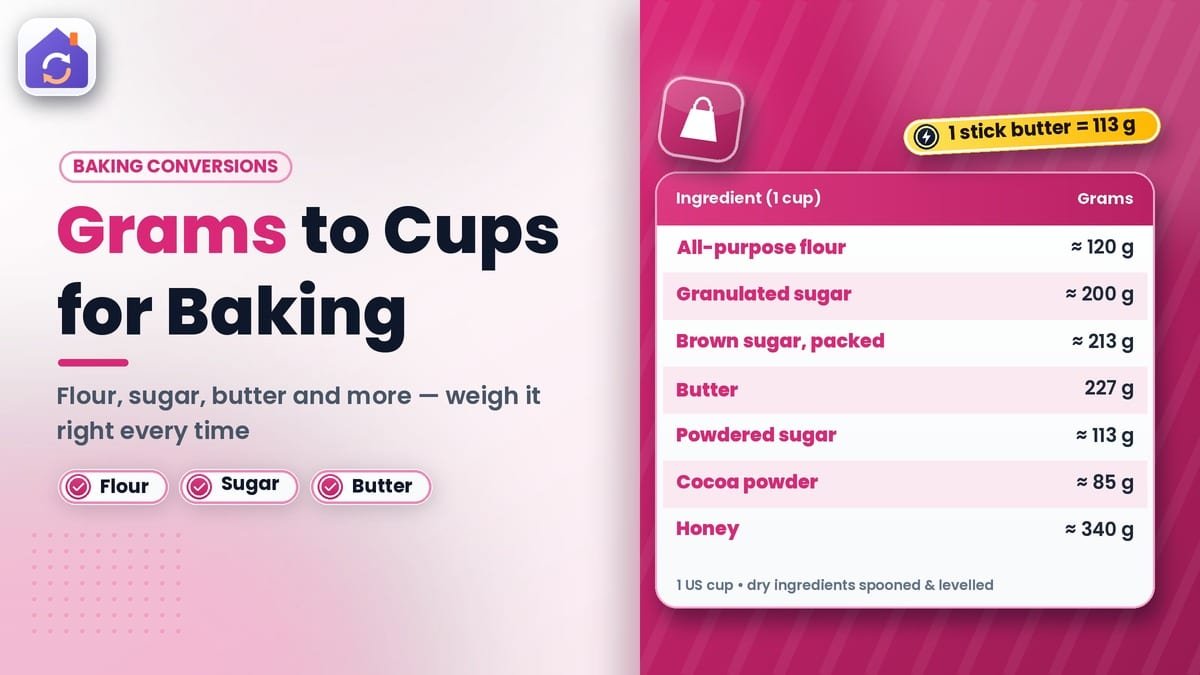
A cup of feathers and a cup of sand fill the same space but weigh very different amounts. Flour is light and airy, sugar is dense, and honey is denser still. That is why one cup of all-purpose flour weighs about 120 g while one cup of granulated sugar weighs about 198 g.
To convert, you need the weight of one cup of that specific ingredient. Then the formula is simple:
cups = grams ÷ grams per cup
For example, 300 g of all-purpose flour is 300 ÷ 120 = 2.5 cups.
Grams to Cups Chart for Common Ingredients
These weights are for one level US cup (236.6 ml), using figures from the widely used King Arthur Baking ingredient weight chart.
| Ingredient | 1 cup in grams | 100 g in cups |
|---|---|---|
| All-purpose flour | 120 g | 0.83 cup |
| Bread flour | 120 g | 0.83 cup |
| Whole wheat flour | 113 g | 0.88 cup |
| Granulated sugar | 198 g | 0.51 cup |
| Brown sugar (packed) | 213 g | 0.47 cup |
| Powdered sugar (unsifted) | 113 g | 0.88 cup |
| Butter | 227 g | 0.44 cup |
| Rolled oats | about 90–113 g | about 0.9–1.1 cup |
| Long-grain rice (dry) | 198 g | 0.51 cup |
| Cocoa powder | 84 g | 1.19 cups |
| Chocolate chips | 170 g | 0.59 cup |
| Honey | 336 g | 0.30 cup |
| Milk | 227–240 g | about 0.42 cup |
| Vegetable oil | 198 g | 0.51 cup |
Different brands and charts vary by a few grams, especially for flour and oats, because the way an ingredient settles changes its weight per cup.
How to Convert Grams to Cups Step by Step
- Find the ingredient in the chart above.
- Divide the grams in your recipe by the grams per cup.
- Round to a practical measure, such as ½, ⅓ or ¼ cup, then make up the rest in tablespoons.
Example: a recipe calls for 150 g of granulated sugar. 150 ÷ 198 = 0.76 cups, which is just over ¾ cup. A ¾ cup measure is 149 g, close enough for any recipe.
To convert the other way, multiply cups by the grams per cup: 2 cups of bread flour is 2 × 120 = 240 g.
Flour: The Ingredient That Varies Most
How you fill the cup changes the result more than which chart you use. Scooping flour straight from the bag compresses it, and a scooped cup can weigh 140 g or more, about 20% heavier than a spooned and levelled cup. That extra flour is the most common reason homemade bread and cakes turn out dry.
For accurate cups, stir the flour, spoon it into the cup and level it with a knife. For even better results, weigh it.
Butter and Sugar Conversions
Butter is the easiest ingredient to convert because US butter is sold in sticks marked in tablespoons. One stick is ½ cup, 8 tablespoons or 113 g, so 250 g of butter is about 2.2 sticks. European recipes often specify a 250 g block, which is just over a cup.
Sugar types differ: brown sugar is packed into the cup and weighs more, while powdered sugar is fluffy and weighs much less. Always use the row that matches your sugar, not a general “sugar” figure.
Liquids: Grams, Milliliters and Cups
For water, 1 ml weighs about 1 g, so 240 g of water is about 1 cup. Milk is slightly denser, but the difference is tiny in a recipe. For oils and syrups, the gap grows: a cup of honey weighs about 336 g, so never measure honey by assuming 1 g per ml.
For volume conversions of liquids, the ml to cups converter is quicker than weighing. For other kitchen volumes, see our kitchen conversion chart.
Why Bakers Prefer Grams
Weighing removes the guesswork. A digital scale reads to the nearest gram, takes less washing up than a set of cups, and gives the same result every time. If you convert a favourite recipe once using this chart and then weigh from then on, your results will be more consistent.
For converting the weights themselves, such as ounces from an American recipe into grams, use the ounces to grams converter or the grams to ounces converter.
Frequently Asked Questions
How many grams are in a cup of flour?
One level US cup of all-purpose flour weighs about 120 grams when the flour is spooned into the cup and levelled. Scooping straight from the bag packs the flour down and can push the weight to 140 grams or more. Bread flour is also about 120 grams per cup, while whole wheat flour is about 113 grams.
How do you convert grams to cups?
Divide the weight in grams by the weight of one cup of that ingredient. For example, 300 grams of all-purpose flour divided by 120 grams per cup is 2.5 cups. Because every ingredient has a different density, you need the specific grams-per-cup figure for what you are measuring.
How many grams is a cup of sugar?
One US cup of granulated white sugar weighs about 198 grams, often rounded to 200 grams. Packed brown sugar is heavier at about 213 grams per cup, and unsifted powdered sugar is much lighter at about 113 grams per cup, so use the figure for your exact type of sugar.
How many grams is a cup of butter?
One US cup of butter weighs about 227 grams, which is two standard sticks. A single stick is half a cup, 8 tablespoons or 113 grams. European butter is usually sold in 250-gram blocks, which is slightly more than one cup, so trim about 23 grams if a recipe needs exactly one cup.
Is 100 grams the same as 1 cup?
Rarely. 100 grams is about 0.83 cups of all-purpose flour, about half a cup of sugar and less than half a cup of butter. Only light ingredients such as cocoa powder or some breakfast cereals come close to 100 grams per cup, which is why a grams-to-cups chart is essential.
How many grams is a cup of water?
One US cup of water weighs about 237 grams, because one milliliter of water weighs about one gram and a US cup holds 236.6 milliliters. Many recipes and charts round this to 240 grams. Milk is very slightly heavier, but for cooking the same figure works well.
Why do grams to cups charts give different numbers?
Charts differ because measuring by volume is inconsistent. The way flour, oats or sugar settle, whether they are sifted or packed, and even humidity change how much fits in a cup. Differences of 5 to 10 grams per cup are normal between sources, which is why weighing is more reliable.
How many cups is 250 grams of flour?
About 2 cups. 250 grams divided by 120 grams per cup is 2.08 cups of all-purpose flour, so 2 level cups plus about a tablespoon gets you very close. If you scoop the flour instead of spooning it, 250 grams may fill only about 1.75 cups.
Can I use grams to cups for liquids?
Yes, but liquids are easier to convert by volume. For water and milk, one gram is about one milliliter, so 240 grams is about one cup. Thick liquids such as honey and syrup are much denser, with a cup of honey weighing around 336 grams, so they need their own figure.
Do I need a kitchen scale for baking?
You can bake without one, but a digital scale makes results far more consistent. It removes the variation in how cups are filled, reduces washing up and lets you follow European and professional recipes directly. Inexpensive scales measure to one gram, which is precise enough for home baking.